
Japanese fashion designer unveils unique blended cotton and Spiber’s Brewed Protein™ fibre fabric, printed with Epson’s pigment inks.
Fashion designer Yuima Nakazato will be unveiling his latest collection at Haute Couture Week on 26 June in the Palais de Tokyo. This much anticipated event will showcase the innovative use of Brewed Protein™ fibres, developed by Spiber using fermentation technology, and Epson’s pigment inkjet printing technology, highlighting the potential for sustainable fashion to captivate and inspire.
Traditionally, printing on blended fabrics requires different types of dye inks, limiting the ability to achieve desired patterns and designs. However, Epson’s Monna Lisa digital textile printing technology combined with pigment inks overcomes these limitations, enabling high-resolution prints on various fabric types. This development has expanded the creative possibilities for designers like Nakazato, allowing them to bring their visions to life with unprecedented detail and precision.
Pigment ink is particularly well-suited for printing on Brewed Protein™ material. Unlike dye inks, pigment inks can be used on various fabric types, whether mono or blended. This flexibility offers fabric manufacturers, brands, and designers an easier and more sustainable means of exploring new textile expressions. Furthermore, pigment ink printing supports the environmental credentials of Brewed Protein™ fibre, aligning with the growing demand for more sustainable materials.
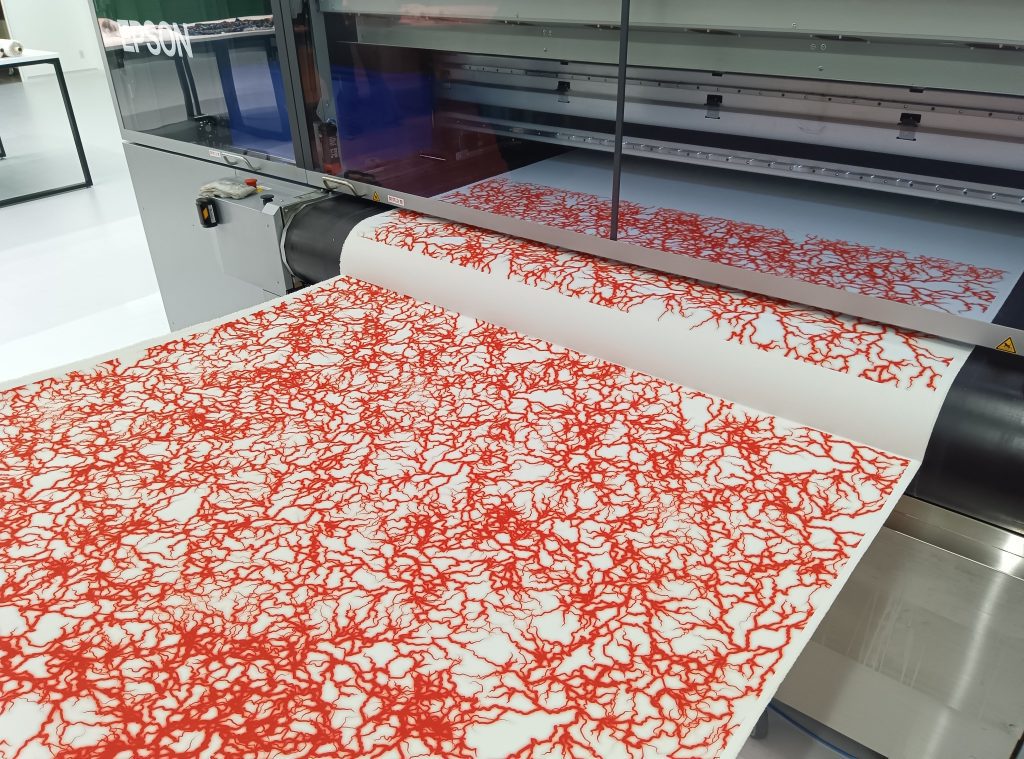
In addition to printing on Brewed Protein™ materials, Yuima Nakazato will display a new collection of garments created using Epson’s Dry Fiber Technology4 and printed with pigment inks by Epson’s Monna Lisa digital textile printer (ML-13000). Epson has made significant enhancements to its DFT non-woven fabric, improving production efficiency and enabling the creation of wider sheets, allowing for more intricate and longer-length designs. Additionally, the non-woven fabric sheets used in Nakazato’s new collection are made from discarded fabric off-cuts sourced from sewing factories, further emphasizing the sustainability of the collection.
Epson and Yuima Nakazato share a vision of bringing the joy of custom, one-of-a-kind garments to people around the world. By integrating innovative technologies and sustainable practices into their workflow, they aim to transform the fashion industry’s value chain. This dedication to reducing environmental impact while creating high-quality clothing demonstrates a commitment to both innovation and responsibility. This collaboration is a testament to the potential of integrating advanced technology with sustainable practices, paving the way for a more eco-conscious future in fashion.
See more on Epson from Eye on Display