
Jörg Scheffler built the first MOTIONCUTTER laser cutting machine to keep his own workflow moving. A few years later, more than 140 are running on four continents.
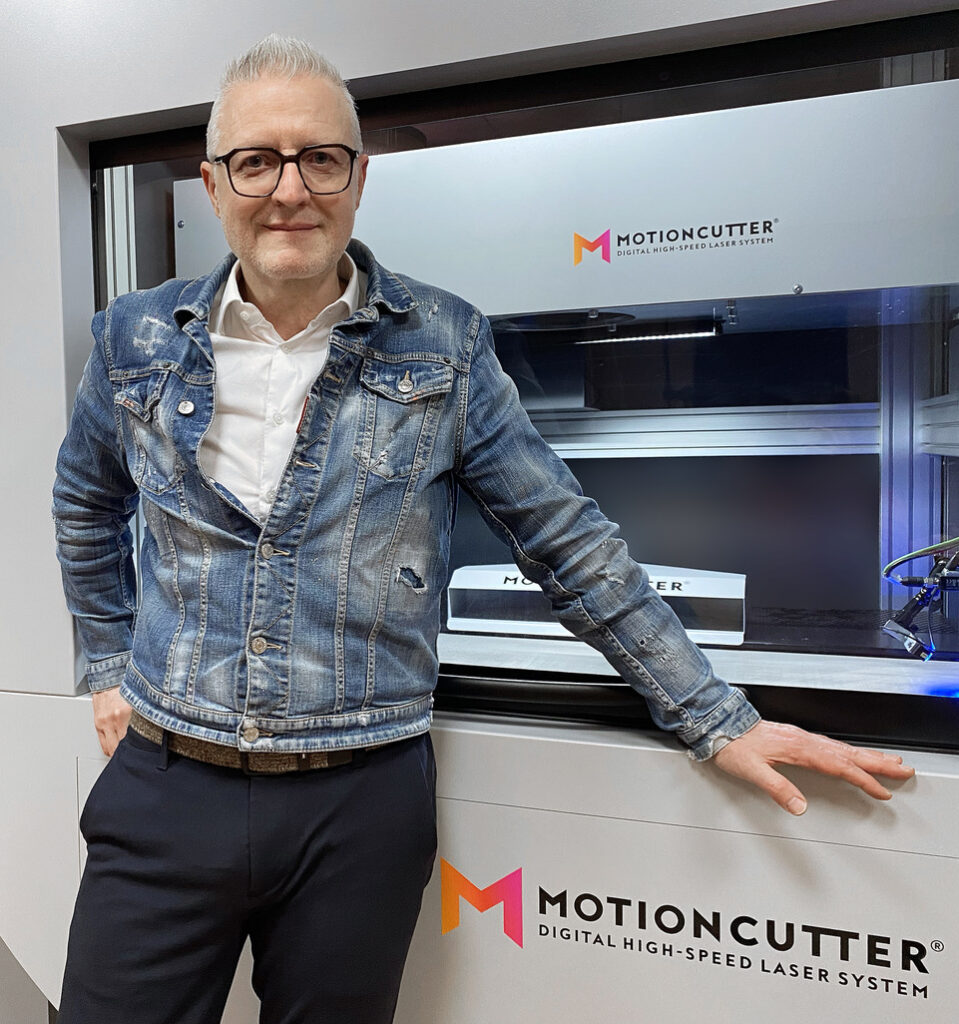
Jörg Scheffler did not set out to build a laser cutting business. He set out to fix his own print business. By the mid 2010s his German print operation, THEMEDIAHOUSE, had three HP Indigos running in shifts on direct mail short runs, and nearly every sheet they produced needed die cutting. The volume going out to external partners and coming back was so high that one full-time member of staff did nothing but coordinate jobs in and out of the building.
Full interview here…
He looked at every option on the market. Rotary die cutting was too slow because of the lead times on the dies. XY laser systems would have meant buying 15 to 20 of them to keep up with the volume, and the running costs killed the idea. Then, at a trade show, he saw a mirror laser being used in a completely different industry. “That was the moment when I said, okay, that’s it, we have to build a machine around this laser,” Jörg says.
Building the machine from the inside out
The first version was put together around a bought-in OEM laser head and engineered from the laser’s working area outwards, based on what the print floor actually needed. From the idea to the first cut sheet took just under a year, with another two years of refinement. The beta testing was real world from day one because the testers were paying customers running live direct mail jobs. “We did the hardest beta ever because our customers complained if the quality was not good enough. The belt feed system that defines the machine today came directly out of that pressure, and now handles everything from very thin film to heavy stock,” he explains.
By 2014 the system was ready for the wider market. 2015 brought the first external sales, and a partnership with HP Indigo opened the door at the Dscoop shows. “It was just like an explosion. In the first year we sold about 14 machines,” Jörg says.
From system user to system producer
By 2018 the decision was on the table. The print business was paying the bills, but MOTIONCUTTER was the future. “If a product doesn’t get developed in the future, it’s dead,” he reflects. He reshaped the team, brought production under one roof, and by the end of 2019 had completed the transition from print and pre-press operation to system builder. Then COVID arrived.
Five machines were already on their way to the United States, but no one could travel to install them. Rather than stall, the team used the time to overhaul the technology. The current generation two looks similar from the outside, but inside, almost nothing is the same as the original. It runs five to seven times faster, and the operator interface is, in Jörg’s words, a green button machine.
The wow factor
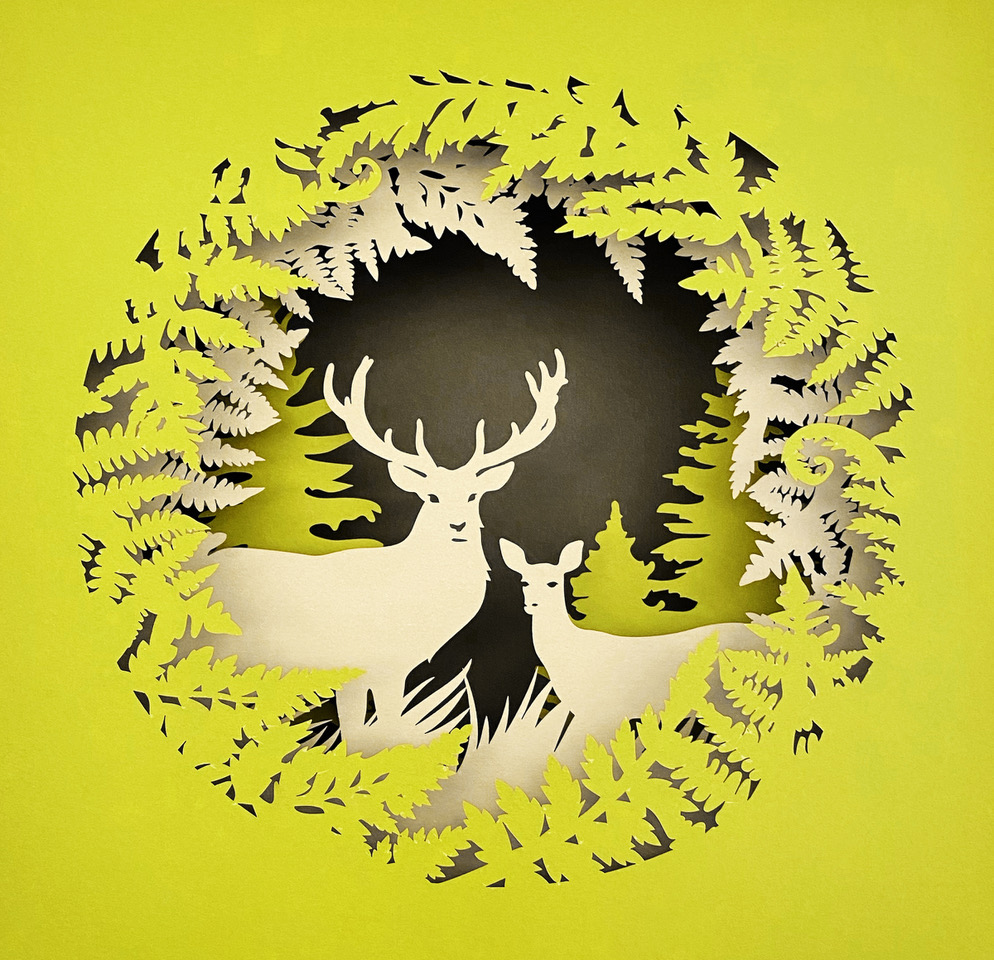
Ask Jörg what people say when they see the machine for the first time and the answer is not in any sales script. “We always say our technology has a wow factor. The laser beam itself is not visible to our eyes, and that makes it a little bit mysterious,” he says.
The numbers do most of the talking after that. MOTIONCUTTER runs at roughly 100 times the volume of the XY laser systems Jörg ruled out at the start. On DTF film, where finishing is the bottleneck for the high volume printers, it processes up to 2,000 sheets an hour. Jörg puts the dynamic at 150 times faster than an XY equivalent, with a tracking error of 450 microseconds between command and mirror movement. A wood engraving that takes 45 minutes on an XY platform is done in a few seconds on a MOTIONCUTTER, and customers are now running thousands of those a day.
The machine has three operating modes. Motion mode runs sheet after sheet for simple contours. For intricate work like greetings card production a Start stop mode brings the sheet into the centre of the laser’s working area, holds it for the highest precision cuts, then accelerates it out as the next sheet comes in. A table system handles 3D elements up to 150mm in height for engraving applications in Static mode.
What comes next
The cutting itself, Jörg argues, is the part nobody can beat them on. So the next phase is everything around it. The team has built a conventional creasing unit that puts crease lines into packaging sheets before they reach the laser. A stripping unit removes the matrix and delivers the finished product clean. For photo and personalised goods manufacturers, MOTIONCUTTER now reads a code on every incoming sheet, clears the belt when a new job starts, drops cut products into RFID tagged jigs, and feeds straight into automated packaging lines. “We don’t see ourselves as a cutting system. We see ourselves as a finishing solution,” Jörg adds.
Looking back at the journey from a print floor in Germany to a global system builder still surprises him. “The whole print industry is in a turning process. We had our own turning process. We changed from a system user to a system producer, and I don’t regret a bit of it,” Jörg concludes.
You can see MOTIONCUTTER in action through advanced video demos from their offices in Germany or at Dscoop Slovenia in June.